Warning Signs Your Sewer Line Needs Professional Inspection
Quick Answer: A handful of signs point to the sewer line itself rather than a single dirty drain: clogs that return within a few weeks of being cleared, more than one fixture backing up at once, gurgling from toilets or drains that aren't being used, sewage odor outside near the yard, and a strip of grass that stays greener or wetter than the rest of the lawn. Any one of these on its own is worth a look. Two or three together usually means the line has a real problem, and a camera inspection is the only way to see what it actually is before you pay for a fix that might not touch it.
You plunge the downstairs bathroom for the third time this month, and it clears just long enough for you to think the problem's gone. Then it's back, sometimes worse, sometimes in a different drain entirely. That pattern is the sewer line trying to get your attention, and it's easy to miss if you're only looking at the fixture in front of you instead of what's happening underneath the yard.
When a Clog Isn't Really a Clog
Most people treat every backed-up drain the same way: plunge it, pour something down it, maybe call for a cleaning, move on. That works fine for a hair clog in a bathroom sink. It doesn't work for a problem in the main line, and the way to tell the difference is how the clog behaves, not how bad it looks.
A Clog That Keeps Coming Back Is The Biggest Tell
If a drain gets cleared and backs up again inside a month, something is still restricting flow even after the visible blockage is gone. That's usually root intrusion, a section of pipe that's sagged, or scale buildup thick enough that clearing the surface layer barely helps. A cleaning that only holds for a few weeks isn't solving the problem. It's buying time.
Watch What Happens In Other Rooms
Run the washing machine and listen for a gurgle from a bathroom on the other side of the house. Flush a toilet and check whether water rises somewhere it has no business rising. Every drain in your home ties into one main line before it leaves the property, so a restriction there can show up almost anywhere, not just at the fixture you're using. That cross-fixture reaction is one of the clearest signs the problem sits downstream, not in the drain you're standing over.
Gurgling deserves its own mention here. A toilet or drain that gurgles on its own, with nothing running anywhere else in the house, is air getting forced backward through the trap because something further down the line is restricting flow. It's a small sound for what it usually means.
What the Yard and Basement Are Trying to Tell You
Some of the clearest warning signs never show up inside the house at all. They show up outside, and homeowners walk past them for months without connecting them to the plumbing.
A patch of lawn that's noticeably greener, spongier, or wetter than the grass around it, especially one that follows a line rather than sitting in a random spot, usually means wastewater is soaking into the soil instead of making it to the sewer main. Grass loves that extra moisture and nutrients. Your yard doesn't need it, and neither does the ground under your foundation.
Sewage odor outside is another one people write off too fast. A whiff near a cleanout or along the side of the yard on a still, warm evening isn't just an unpleasant smell drifting from somewhere else. If it's consistent and it's coming from roughly the same spot every time, there's a decent chance a section of pipe is leaking below grade.
Tip: Walk the path your sewer line likely takes from the house to the street on a dry day and again after a hard rain. A soft, sunken, or unusually wet strip that shows up in both conditions is worth mentioning to whoever inspects the line, since it often marks where the pipe sits closest to the surface or where a problem already exists.
Inside, damp basement walls, a musty smell that doesn't go away with a dehumidifier, or new hairline cracks near a floor drain can trace back to the same source. None of these prove a sewer problem by themselves. Together, especially paired with a drain that's been acting up, they build a picture that's hard to ignore.
Why Older Macomb and Oakland County Homes Move Up the Timeline
Age matters here more than most homeowners expect. A lot of housing stock across Macomb and Oakland County still runs on original cast-iron or clay sewer pipe, some of it laid before mid-century, and that pipe doesn't fail gracefully. Cast iron corrodes from the inside out, and the rough, narrowed surface that results catches everything that passes through it. Clay pipe is made of short jointed sections rather than one continuous run, and those joints shift as the ground around them settles or heaves through a Michigan winter's freeze-thaw cycle.
Mature trees near an older lot add another layer. Roots chase moisture, and a sewer line is a reliable source of it. A root finds a joint that's already loosened by decades of freeze-thaw movement and works its way in, and once it's inside, it keeps growing. That's a topic worth its own read if it's what's happening at your place, but the short version for this list is simple: a home with original pipe and mature trees nearby has more ways for a line problem to start, which means the warning signs above deserve faster attention, not a wait-and-see approach.
And it's not just about the pipe's age. A newer home built on a lot with poor original grading or a rushed sewer tap can develop the same symptoms years earlier than you'd expect. Age raises the odds. It doesn't decide the outcome on its own.
What a Camera Actually Confirms
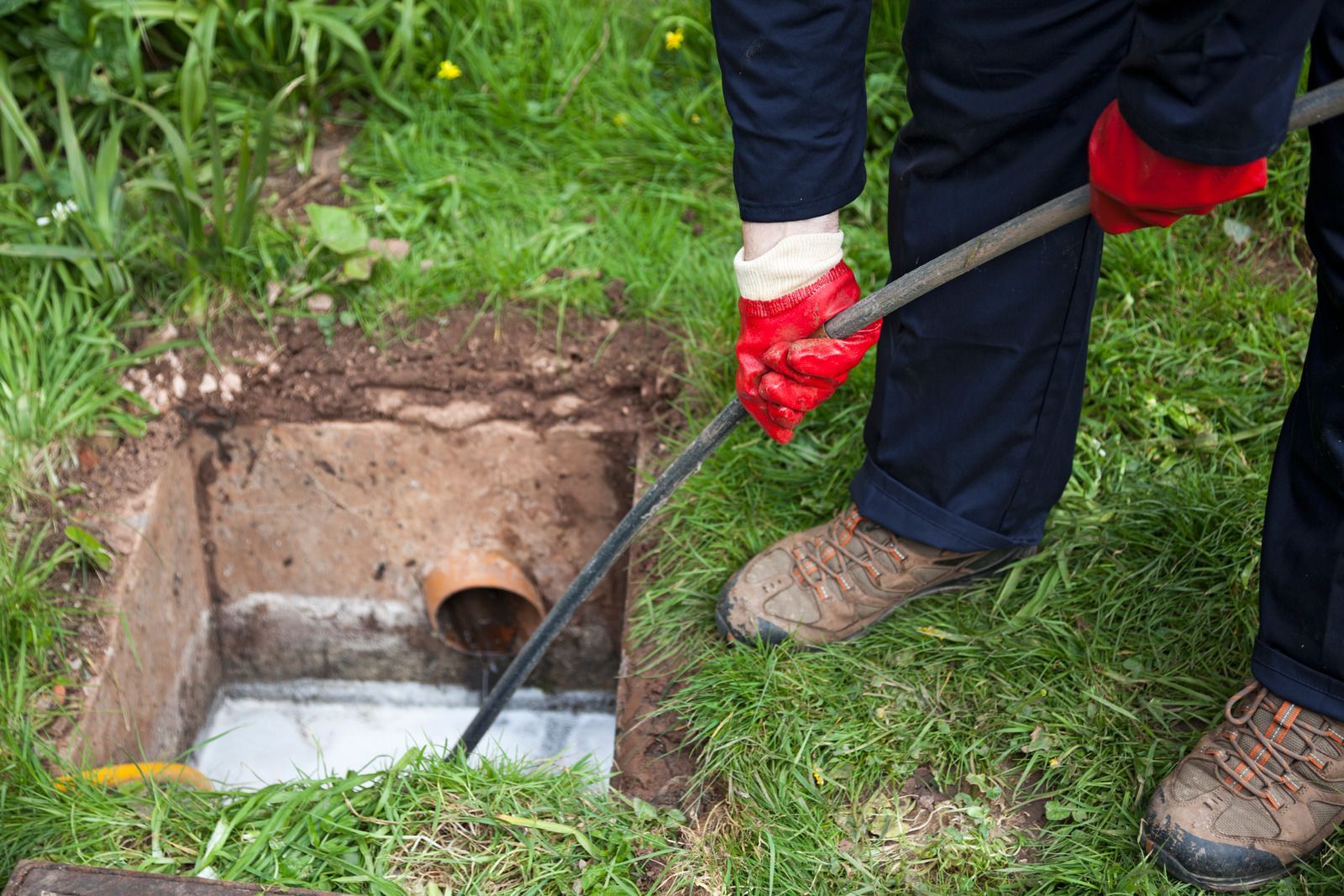
Every sign above tells you something's wrong. None of them tell you exactly what, or exactly where, and that's the gap a sewer camera closes. A waterproof camera head goes down the line from a cleanout and shows the pipe from the inside: where a clog sits, whether it's roots, grease, or scale, whether a section has bellied or shifted out of alignment, and how far that point sits from the house.
That distance matters more than people expect it to. A problem twenty feet from the cleanout under the yard is a very different job than one under the driveway or close to the foundation, and knowing that before any work starts changes what a fix actually costs in time and disruption. Guessing at that from the symptoms alone just isn't reliable enough to plan around.
Root intrusion, grease buildup, and general scale usually respond well to a thorough cleaning once the camera confirms that's what you're dealing with. A belly, a collapsed section, or a badly offset joint is a structural problem, and no amount of cleaning fixes the shape of a pipe. Skipping the camera and jumping straight to a cleaning means you might be treating the wrong problem, or treating the right one without knowing whether it'll hold.
What Happens If You Wait
None of these signs get better with time. A clog that returns keeps returning, usually a little sooner each cycle as whatever's restricting the line grows or shifts further. Roots keep growing once they've found water. A damp yard patch keeps getting damper as more wastewater finds its way into the soil instead of the pipe.
Warning:
If you're seeing sewage odor outside, a persistently soggy yard patch, or backups in more than one drain at the same time, avoid running large amounts of water through the house until the line has been checked. Laundry, dishwashing, and long showers all add volume to a line that may already be struggling to keep up, and that extra water has to surface somewhere if the pipe can't carry it.
Left alone long enough, a slow line problem tends to become a sudden one. A gradual backup that's been building for months can turn into standing sewage in a basement after one heavy rain or one load of laundry too many, and that's a cleanup that costs far more time, money, and aggravation than a
scheduled inspection would have.
Frequently Asked Questions
How is a sewer line problem different from a regular clogged drain?
A regular clog sits in one fixture's own branch line, affecting just that sink or tub. A sewer problem sits in the shared main line, so it hits multiple drains and keeps returning after cleaning.
Is a soggy or unusually green patch in my yard always a sewer problem?
Not always, but worth checking. Poor drainage, an irrigation leak, or a low spot can create the same look. A camera inspection rules the sewer line in or out faster than guessing from the grass.
How urgent is it if I'm only seeing one of these signs, like occasional gurgling?
Occasional gurgling alone is worth watching rather than panicking over. Once it happens every time you run water elsewhere, or a second sign appears alongside it, that's the point to schedule a camera inspection promptly.
Can I just have the line cleaned instead of paying for an inspection first?
You can, but cleaning without a camera is a guess. If the real issue is a belly or collapsed section, cleaning won't fix it and symptoms return. Seeing inside aims work at the actual problem.
Does a camera inspection mean digging up my yard?
No. The camera goes down through an existing cleanout or drain access point, so no digging is required. Digging comes only afterward, and only if the footage reveals a structural issue needing a targeted repair.
How often should an older home in this area have its sewer line inspected?
For a home with original cast-iron or clay pipe and mature trees nearby, every couple of years suits even without symptoms. If warning signs appear, that timeline tightens, since early catches stay cleanings not repairs.
Reading the Signs Before They Become Emergencies
The difference between a nuisance drain and a failing sewer line rarely shows up in a single symptom. It shows up in the pattern: clogs that return, fixtures reacting to one another, odor and moisture surfacing where they shouldn't. Ready Jetter Plumbing has spent 25 years reading those patterns under older homes in Macomb, MI, where cast-iron and clay pipe give a problem more places to hide than a quick cleaning will ever reveal on its own.
What all of these signs share is that they get louder, not quieter, the longer they go unread. A returning clog returns sooner. A damp patch spreads. Roots that found their way in keep growing toward the water they came for. Catching the shift early, while the fix is still a cleaning rather than a dig, is far less about luck than about paying attention to the small warnings before the line stops giving them at all.